Confirm the method with the project
EN 14651 provides relevant beam-test method context. For polymer-fibre-only projects, also confirm the test plan accepted by the project. A method name is not product certification.
Loads, joints, mix, placing and finishing belong in the same flooring discussion.
Designers: check service requirements first ↓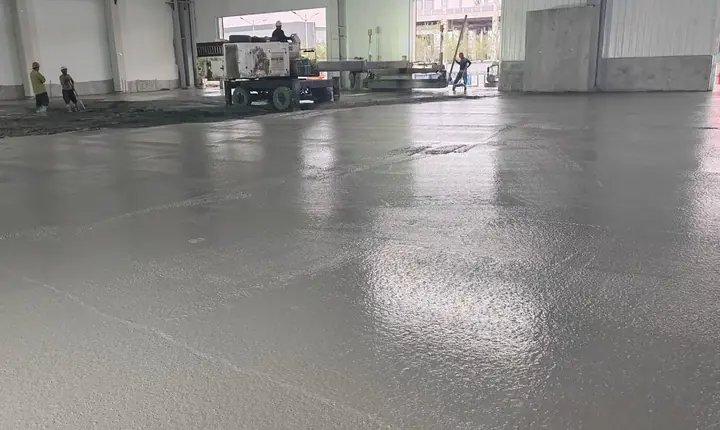 Service conditions → mix trial → placing / finishing → project verification
Slab design and joint layout are the project designer's responsibility. This page helps prepare fibre-evaluation information; it does not specify slab thickness, reinforcement or a fixed substitution ratio.
Factory, warehouse or another use; vehicles, racking, wear and project-specified service requirements.
Provide the existing slab thickness, subbase, joints and design information. Identify unresolved details rather than asking the fibre supplier to invent a design.
Finishing method, visible fibres, coatings and subsequent treatments should be checked together during the trial pour.
Crack-control targets, specified residual performance and other project criteria. Confirm the method, specimen preparation and acceptance conditions first.
These are trial-pour recording points, not substitutes for site operating, curing or joint-cutting procedures.
Record the actual mix, dosage to evaluate, mixer and dosing method. Check dispersion; successful addition alone does not establish acceptable performance.
Check site transport, pumping / discharge and spreading. Trials should represent the proposed production and construction conditions as closely as practicable.
Record finishing, surface condition and subsequent coating needs. Acceptance follows the project agreement; no claims of "zero exposed fibres" or "never cracks" are made.
Follow the project plan for curing, joints and acceptance. Record site observations separately from specified tests for the responsible party to assess.
This is a priority candidate for this application, not a final recommendation independent of the conditions. The product page is the source for full specifications and controlled documents.
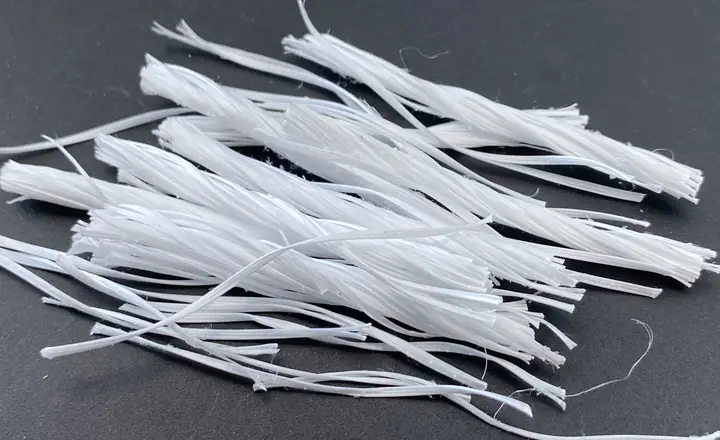
Polypropylene / polyethylene blend; 20 twisted flat monofilaments with longitudinal grooves and no surface embossing. A candidate for project evaluation in flooring.
These are nominal TDS fibre specifications, not site concrete, component or support-performance results. Source: TDS Rev. 20260701.
TDS suggested starting range: 4–8 kg/m³.Confirm final dosage through project design, mix and actual process trials. Dosage alone does not establish energy absorption, residual strength or finished-product performance.
Twist Wave 50 uses ordinary PE bags of 2 kg each. Open and remove the bag before dosing; it is not water-soluble film packaging. Carton: 12 kg; pallet: 504 kg. Source: TDS Rev. 20260701.
TDS: add fibres with the concrete materials in the normal dosing sequence. Continue mixing for 3–5 minutes after addition, or until uniform dispersion is confirmed. Check actual loading, timing and dispersion in plant trials.
Connect design requirements, trial-pour conditions and test records to create a reviewable basis for selection.
EN 14651 provides relevant beam-test method context. For polymer-fibre-only projects, also confirm the test plan accepted by the project. A method name is not product certification.
Twist Wave 50 nominal monofilament specifications cannot be used to calculate floor residual strength, a slab-thickness reduction or a steel-fibre substitution ratio.
Retain product batch, mix, dosage, mixing and placing conditions, finishing observations, curing and the source of specified tests.
Conchip operates a factory-internal laboratory; it is not accredited. Internal data support comparison and project discussion. Arrange independent third-party testing when accredited evidence is required.
These cases describe individual projects. Laboratory measurements are listed separately in the test database.
A covered floor: Twist Wave 50 in a concrete base layer beneath decorative stone panels.
A finish-sensitive floor: Twist Wave 50 with a mineral-aggregate wearing finish. Site feedback reported fewer exposed fibres.
A recycled fibre option: Recycled 44 macro fibre was used in floor concrete across two phases of an industrial park.
No. Joints, curing, subbase and structural arrangements must follow project design and construction requirements. Fibres do not automatically remove these requirements.
No crack-free guarantee is made. Define the control target and acceptance criteria, then evaluate them through mix trials, trial pours and specified tests.
The formal product name, proposed trial mix, mass calculated from volume and dosage, packaging instructions, equipment and trial-pour plan. Highlight that the ordinary PE bag must be removed.
Send the information available and mark unresolved conditions. Continue through Project / Technical Inquiry.
Send application and project conditionsReview the information → current TDS / SDS and method information → missing items and trial discussion. Response timing and the records available must be confirmed separately.
Twist Wave 50: ordinary PE bag 2 kg, carton 12 kg, pallet 504 kg. Do not confuse this with water-soluble film bundles. Confirm shipment packaging, labels, destination, quantity and purchasing schedule individually. Stock and lead time are not assumed.
Distributor / Importer Inquiry →List the formal product name, required document version, application, trial quantity and supply quantity. Product pages retain the controlled TDS / SDS links rather than duplicating conflicting document versions across applications.
Start a specification-led project inquiry → Trade sourcing route →Use these articles to prepare process information, trial records and evidence before selecting a project condition.
Can fibre concrete floor joints be removed? Separate shrinkage, curling, restraint, loading and joint-edge risks before changing saw-cut or transfer details.
Read more
Understand macro synthetic fibre reinforced concrete, its application routes, performance evidence, production controls and limits before selecting a product.
Read more Specify a jointless industrial floor only after checking loads, ground, slab model, joints, shrinkage, residual flexural evidence, trials and site QA.
Read more Learn what EN 14651 beam testing measures for industrial floors, including load-CMOD, LOP and residual flexural data, and when the method applies.
Read more Identify why fibres may be visible on a finished concrete floor and record the mix, placing, finishing, surface zones and project acceptance.
Read more Troubleshoot fibre balling in floor concrete by checking mass dosing, packaging, addition rate, mixer condition, mixture compatibility and batch records.
Read more Choose an industrial-floor fibre by defining its function, residual flexural evidence, mixture and finishing conditions, documents and trial acceptance.
Read more