Measurement and dosing
Calculate mass from batch volume and the dosage to evaluate. Check water-soluble film bundles against the actual dosing system and retain batch identity.
From component requirements and fibre dispersion to demoulding and handling, keep the basis for each decision in the production record.
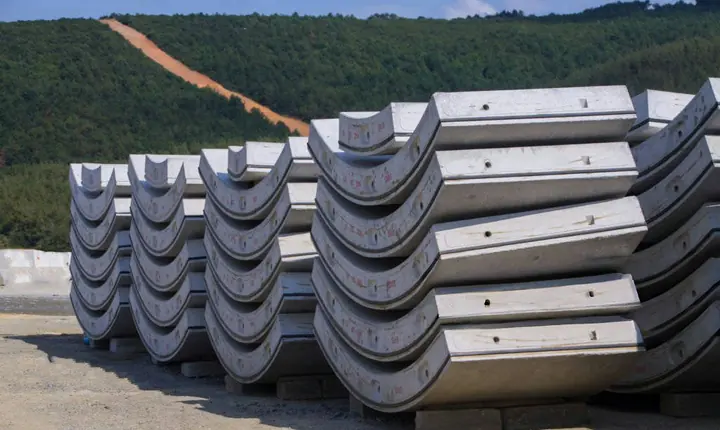
The fibre is a material input. Demoulding, handling, installation and service requirements need verification against the component geometry, existing reinforcement and project specification.
Geometry, thickness, joints and existing design, with the intended fibre role clearly stated.
Casting, curing, demoulding, turning, storage, transport and installation conditions are evaluation inputs, not operating permissions given by this page.
Project-specified material, concrete and component tests, responsible parties, specimen conditions and report sources.
These are plant-trial checks to confirm, not acceptance thresholds or operating procedures for a particular segment.
Calculate mass from batch volume and the dosage to evaluate. Check water-soluble film bundles against the actual dosing system and retain batch identity.
Observe dispersion, equipment loading and actual casting. Check the production cycle rather than copying another factory's timing.
Record curing, demoulding and subsequent handling observations. Refer abnormalities to the responsible project party; do not assume an earlier demoulding time.
Review batch consistency and specified component tests under the project plan. Discuss routine supply after confirming repeatability.
This is a priority candidate for this application, not a final recommendation independent of the conditions. The product page is the source for full specifications and controlled documents.
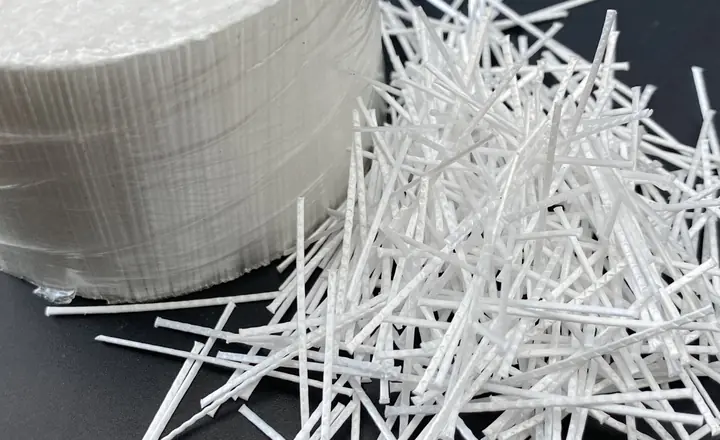
100% virgin polypropylene; flat cross-section with diamond indentations. A candidate for project evaluation in precast concrete.
These are nominal TDS fibre specifications, not site concrete, component or support-performance results. Source: TDS Rev. 20260701.
TDS suggested starting range: 4–8 kg/m³.Confirm final dosage through project design, mix and actual process trials. Dosage alone does not establish energy absorption, residual strength or finished-product performance.
Water-soluble film bundles; cartons of 5 kg or 10 kg net. Dose by mass, not estimated bundle count. Add with cement and aggregate in the normal sequence. Continue mixing for 3–5 minutes after all fibres enter the mixer, or until uniform dispersion is confirmed. Verify dosing sequence, loading and timing in plant trials; this is not a production-cycle guarantee.
Material tests, concrete tests and component verification are different evidence levels; one does not replace another.
Explore tunnel segment test dataHigh Strength 48: 48 mm, equivalent diameter 0.95 mm and ≥570 MPa are nominal fibre specifications, not segment crack-resistance, load-capacity or handling-test results.
Review project requirements with the actual mix, dosage, casting and curing conditions. An ordinary material report is not component certification.
Changes to reinforcement, demoulding or handling must be decided by project designers and responsible parties. No segment result is inserted without traceable evidence. The TDS does not declare residual strength.
Conchip operates a factory-internal laboratory; it is not accredited. Internal data support comparison and project discussion. Arrange independent third-party testing when accredited evidence is required.
These cases describe individual projects. Laboratory measurements are listed separately in the test database.
Project-specified 40 mm fibre from the High Strength family. The case describes third-party fibre type testing on a sample from the same family.
Custom 40 mm fibre from the High Strength family for power utility tunnel segments.
A dual-fibre specification using High Strength 48 and 19 mm polypropylene monofilament for a road crossing.
This page gives no reinforcement-substitution ratio. Any change needs design, specification and targeted component verification, confirmed by qualified responsible parties.
No. High Strength 48 is flat with diamond indentations and an equivalent diameter of 0.95 mm, prioritized for precast evaluation. High Strength Shotcrete 48 has a near-round / oval cross-section and an equivalent diameter of 0.70 mm, prioritized for shotcrete evaluation. Both are 48 mm long; that does not make them interchangeable.
No. Internal results support comparison. The project's independent third-party, material and component acceptance requirements must still be met separately.
Send the information available and mark unresolved conditions. Continue through Project / Technical Inquiry.
Send application and project conditionsReview the information → current TDS / SDS and method information → missing items and trial discussion. Response timing and the records available must be confirmed separately.
High Strength 48 uses water-soluble film bundles and cartons of 5 kg or 10 kg net. Distinguish plant-trial quantities from subsequent routine supply. Confirm shipment packaging, labels, destination, quantity and purchasing schedule individually. Stock and lead time are not assumed.
Distributor / Importer Inquiry →List the formal product name, required document version, application, trial quantity and supply quantity. Product pages retain the controlled TDS / SDS links rather than duplicating conflicting document versions across applications.
Start a specification-led project inquiry → Trade sourcing route →Use these articles to prepare process information, trial records and evidence before selecting a project condition.
A production quality-control guide for fibre-reinforced tunnel segments, covering dosing, mixing, casting, demoulding and batch traceability.
Read more
Understand macro synthetic fibre reinforced concrete, its application routes, performance evidence, production controls and limits before selecting a product.
Read more Review fibre reinforced concrete creep in tunnel segments: sustained cracked response, project load stages, test evidence, limits and production traceability.
Read more Can macro-synthetic fibre replace steel fibre in precast concrete? Compare design functions, residual performance, factory trials and component validation.
Read more A fibre tensile value does not define concrete performance. Learn how dispersion, bond, pull-out, residual testing and component validation work together.
Read more Diagnose plastic shrinkage, thermal movement, restraint and handling cracks before setting evidence-based precast demoulding release criteria.
Read more Build a tunnel-segment evidence chain from TDS and EN 14651 residual testing to full-scale flexure, TBM point loading and project approval.
Read more Diagnose tunnel-segment leakage, misalignment, edge damage and fire by checking joints, gaskets, erection, grouting and project conditions.
Read more