What must the support do?
Ground and excavation conditions, excavation use, support stage, existing support elements and design requirements.
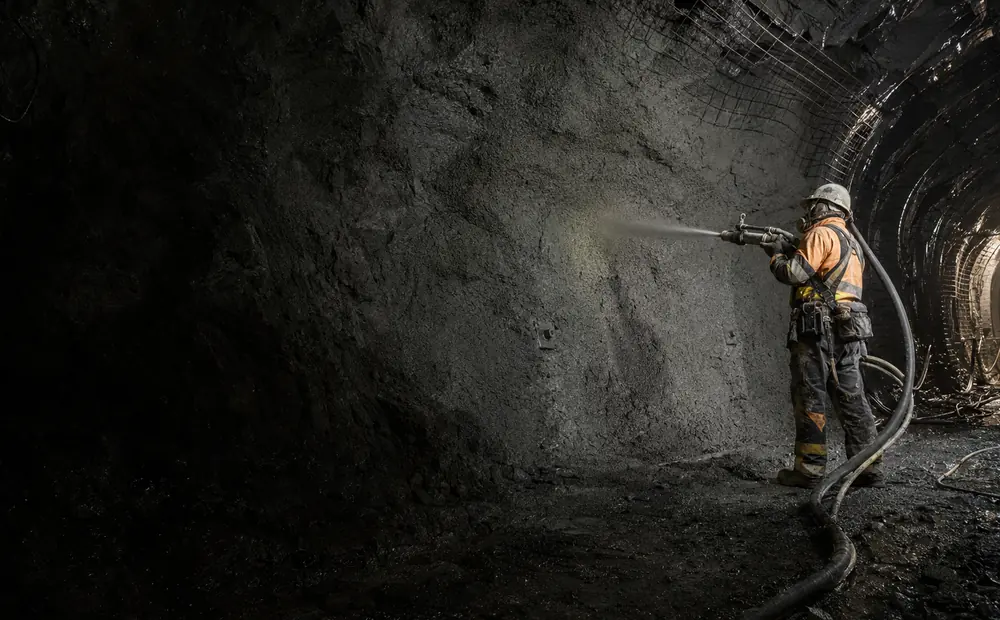
Define the working face and spraying conditions first,
then connect the candidate fibre, testing and supply.
Mining ground support is more than a material purchase. Evaluate the fibre within the complete support system and the actual spraying operation.
Ground and excavation conditions, excavation use, support stage, existing support elements and design requirements.
Wet- or dry-mix process, equipment and lines, nozzle constraints, dosing and mixing, and site operating conditions.
Layer thickness and early-strength requirements, construction records, specified test methods, result sources and approval procedures.
Site trial plan, dosage to evaluate, quantity, destination, timing and required documents.
Confirm the actual equipment and mixing route first.
Do not transfer wet-mix mixing requirements directly to dry-mix work.
Calculate the fibre mass from the concrete volume per batch and the dosage being evaluated.
Check the dosing sequence, mixing conditions and fibre dispersion.
Plan equipment and site trials around the actual lines, nozzle and working conditions.
Keep the mix, dosage, construction observations and specified tests in the same record.
Determine the fibre and dry-material masses from the mix being evaluated.
Dry-mix the fibres with cement, sand and aggregate uniformly, checking the actual equipment conditions.
Check nozzle operation, water control and actual spraying conditions separately.
Retain site mixing, spraying observations and acceptance-test records.
TDS Rev. 20260701: water-soluble film bundles; standard cartons of 5 kg or 10 kg net. Dose by mass. For wet mix, continue mixing for 3–5 minutes after adding the fibres, or until uniform dispersion is confirmed. For dry mix, check the actual equipment and operating conditions.
This diagram organizes control points for project discussion. It does not replace equipment procedures, safety requirements or support design, and does not guarantee a particular site result.
A priority candidate is not a final selection.
The product page remains the source for complete specifications and controlled documents.
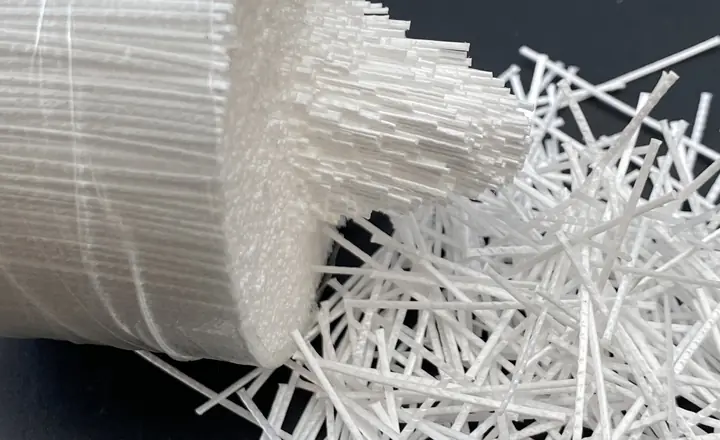 Actual product photograph
100% virgin polypropylene fibre with an indented surface. A candidate for project evaluation in mine roadways, tunnels and other shotcrete operations.
These are confirmed nominal fibre specifications, not site concrete or support-performance results.
Final dosage depends on project design, mix, equipment and testing. Dosage alone does not establish energy absorption or residual strength.
When energy absorption needs evaluation, first define the specified method and acceptance requirements, then organize specimens, testing and review of the results.
Explore ground-support test dataEngineers: discuss the acceptance specificationUse the project-specified test method. EN 14488-5 is a method reference here; it does not mean this product has performance certification under that method.
Retain product and batch identity, specimen preparation and curing, mixing and spraying conditions, test records and data sources.
One set of results cannot be extended directly to every mining condition. Fibre tensile strength cannot be used to derive support performance.
Conchip operates a factory-internal laboratory; it is not accredited. Internal data are for reference and project discussion. Arrange independent third-party testing when accredited evidence is required.
There is no fixed substitution ratio for every mine. Changes to the support-material combination depend on project design, specifications and targeted verification, not the product name or dosage alone.
No. The mix, fibre identity, wet- or dry-mix route, equipment, specimen preparation and curing, specified method and acceptance conditions are also needed.
Start with the existing site conditions and project requirements. We can review the current product TDS, SDS and method information. Any specific test records must actually exist and be authorized for the intended use.
You do not need every parameter finalized.
Send what is available and identify the conditions still to be confirmed.
List the formal product name, TDS / SDS version, intended conditions, trial quantity and supply quantity for review against the project specification.
Discuss the product specification →Confirm the market, documents, packaging, expected quantity, destination and purchasing schedule. Stock and lead time must be confirmed for the actual order.
Distributor / importer route →Trade sourcing route →Use these articles to prepare process information, trial records and evidence before selecting a project condition.
Assess synthetic fibre corrosion in mining shotcrete by exposure, drainage, cracks, interfaces, support duty, testing and inspection—not material slogans.
Read more
Understand macro synthetic fibre reinforced concrete, its application routes, performance evidence, production controls and limits before selecting a product.
Read more
Compare fibre reinforced shotcrete testing under ASTM C1550-26, EN 14488-5, ASTM C1609-24 and EN 14651 without converting unlike outputs.
Read more Compare macro-synthetic and steel fibres for mining shotcrete by support duty, spraying conditions, panel evidence and project acceptance.
Read more Compare wet-mix and dry-mix shotcrete control points for synthetic fibre dosing, mixing, equipment trials, records and project acceptance.
Read more Plan a traceable synthetic fibre shotcrete trial from acceptance criteria and mass dosing to equipment, test panels, records and review.
Read more Record shotcrete rebound without confusing a site process indicator with fibre performance, slab energy absorption or beam-test results.
Read more